Johnson's Brexit Plan Lost the Popular Vote
December 13, 2019,
Few modern “democracies” choose their leaders by an election system as hideously undemocratic as ours in the United States. One that does is the UK, from which we inherited our practice of filling seats in our legislature entirely through single-winner elections in geographic districts. So it’s worth taking a look at what that system wrought in yesterday’s election there.
As the headlines proclaim, the pro-Brexit Conservative Party won a commanding majority in parliament, with 56% of the seats. They won only 43% of the popular vote, however. That’s still more than any other single party, but if you consider the parties according to their position on leaving the EU, a different picture emerges.
The UK’s many parties took a variety of positions on Brexit. Some, including Johnson’s Conservatives, favor leaving next month; some are committed to leaving but want changes to the plan; some favor a new referendum; some favor remaining. If we group them into two large categories, those that favor leaving (with or without changes to the plan) and those that want either to remain or to put it to a new vote of the people, here’s how the popular vote came out:
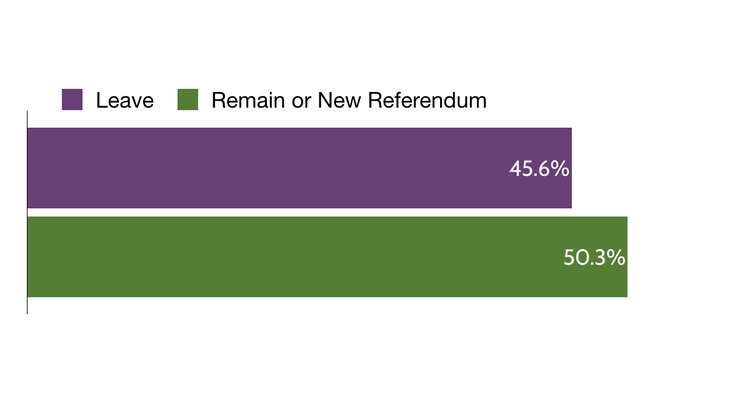
To break it down:
Pro-Brexit parties: Conservative (43.6%) and Brexit (2.0%).
Remain/New Referendum parties: Labour (32.2%), Liberal Democrats (11.5%), SNP (3.9%), Green (2.7%).
(I’m counting only parties that won at least 1% of the vote, so it doesn’t add up to 100%. I don’t have the numbers to count every party.)
So while Brexit won in the 2016 referendum, yesterday the parties that supported leaving without another referendum lost by almost a five-point margin. And yet they won a dominant majority in seats.
Most of the UK’s former colonies have abandoned this kind of anti-democracy. So should we. Sign the petition.