Paris Agreement on the Table Despite Widespread American Support
July 26, 2024,
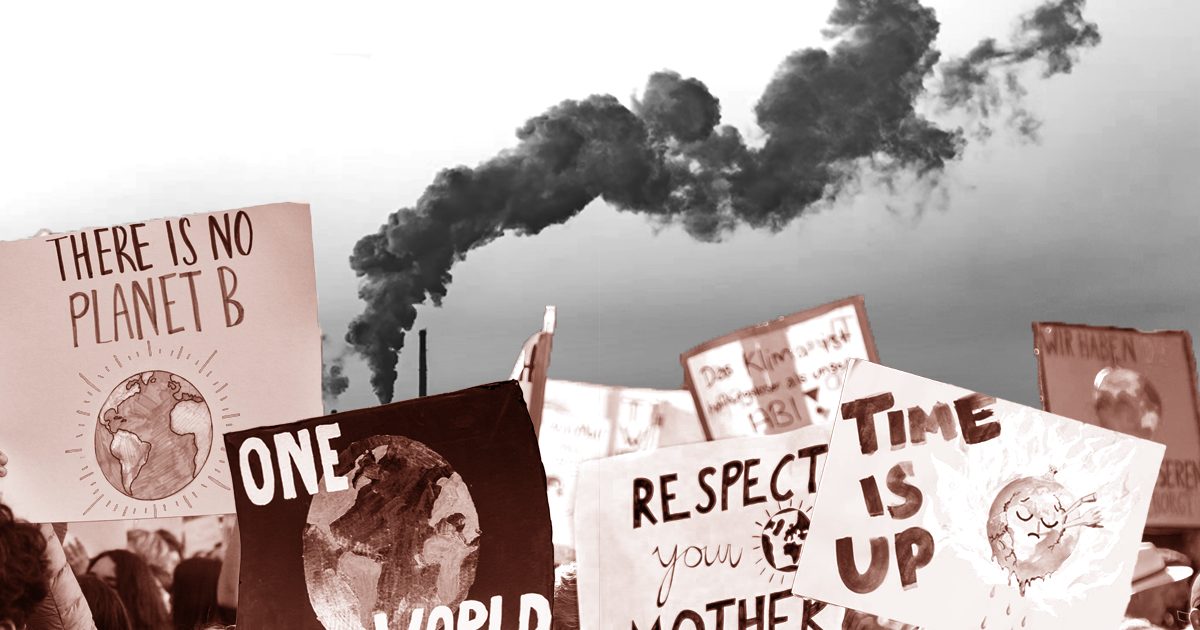
The Paris Agreement is an international treaty adopted in 2015 by 196 parties, including the United States. The treaty requires signatories to set binding goals for emissions reduction. Progress on these goals is reported through the Enhanced Transparency Framework (ETF). The treaty also requires developed countries to assist developing countries with sustainability efforts. The main complaint of some US politicians with this agreement is that other countries, namely China, India, and Russia, are free riding on US involvement without actually reducing their own emissions. According to the Climate Change Performance Index, “an independent monitoring tool for tracking countries’ climate mitigation performance”, China and India outperform the US in multiple metrics for climate change mitigation.
In the first debate of the 2024 election cycle, former president Trump defended his decision to leave the Paris Agreement in 2016. He has since committed to leaving the international treaty again, if he is elected. This policy stands in sharp contradiction to the majority opinion among American voters, but that isn’t anything new. Most Americans also supported the Paris Agreement when the former president announced his intention to pull out in 2016. At the time, the Associated Press-NORC Center found that 77% of those surveyed believed that climate change was happening and 82% supported staying in the agreement even if other countries did not meet their obligations. Another survey conducted by the Yale Program on Climate Change Communication in 2016 found that 69% of voters supported the Paris Agreement.
In 2016, our broken electoral college system overturned the will of the people regarding the Paris Agreement. However, 2016 wasn’t the first time that a president who lost the popular vote took the US out of an international climate agreement. In 2000, George W. Bush also lost the popular vote but won the Electoral College. The president subsequently ended US participation in the 1997 Kyoto Protocol, essentially killing the treaty’s legitimacy and encouraging other countries to ignore their commitments. On the other hand, former Vice President Al Gore, who won the popular vote but lost the Electoral College, had (and has since) made climate change policy a top priority. He made man-made global warming a topic in the House in 1981, well-before it was a ballot issue. Gore also played a leading role in establishing the UN Framework Convention on Climate Change as well as the Kyoto Protocol itself. The people voted for a candidate who would not only have kept the Kyoto Protocol alive but would have likely expanded it.
The American opinion on climate change and the Paris Agreement hasn’t substantially changed since 2016. A survey conducted by the Associated Press-NORC Center in 2024 found that 78% of Americans (age 18 and up) believe that climate change is happening, and 54% believe that it is “caused entirely/mostly by human activities”. Even among Republicans alone, these numbers are consistent. A survey conducted by Pew Research Center in 2023 found that 54% of Republicans supported US participation in international climate efforts. Yet more significantly, 79% of republicans ages 18-29 stated that “human activity contributes a great deal or some to climate change”.
Regardless of the popular bipartisan support for the Paris Agreement and other climate change mitigation efforts, the Electoral College allows a minority of people to decide the presidency and thus the US stance on international climate cooperation. In 2000 and 2016, the Electoral College undermined the will of the people, causing incredible damage to global climate mitigation. With the Paris Agreement once again a topic of electoral debate in 2024, it is more crucial than ever that the popular consensus on climate change and international cooperation is respected.
In order to ensure that American foreign policy is determined by all Americans, we must end the Electoral College.