TN Anti-Drag Law is Upheld by Appeals Court, Because of Judge Appointed By President Who Lost the Popular Vote
August 6, 2024,
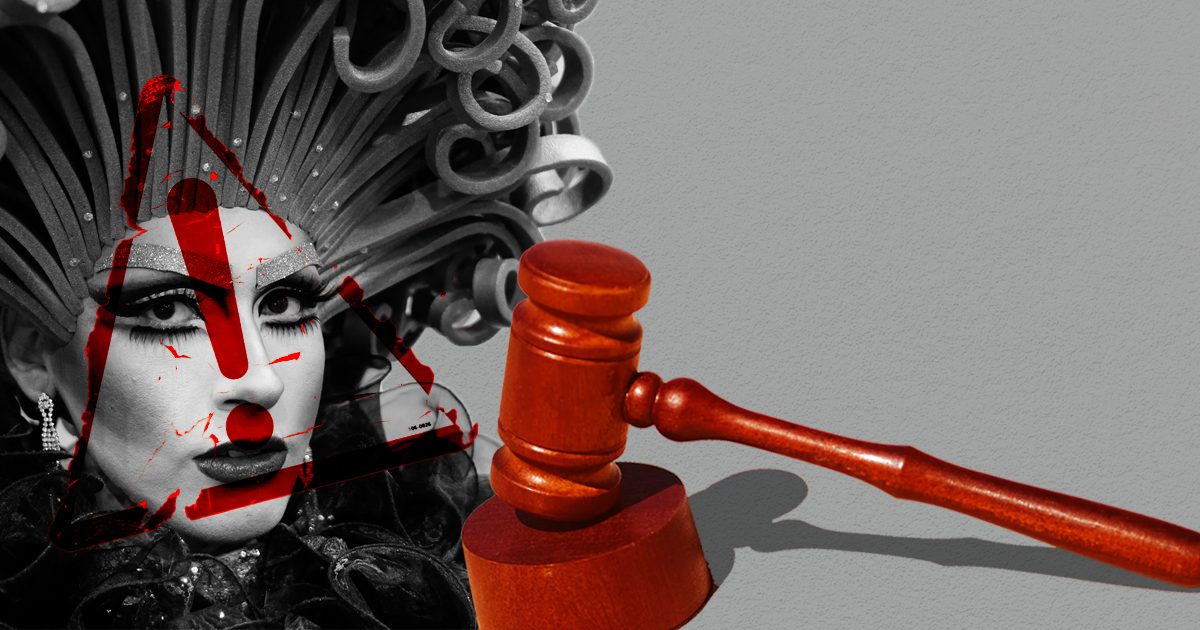
On July 18, 2024, the US Sixth Circuit Court of Appeals, in a 2-1 decision, overturned a lower court decision that had struck down the Tennessee Adult Entertainment Act (AEA) as unconstitutional. The opinion, authored by Judge Nalbandian, dismissed the case, stating that Friends of George’s (FOG) “lacks standing” to challenge the AEA. Judge Nalbandian was appointed by a president who lost the popular vote. Even at the time, his appointment was challenged due to his “highly partisan and ideological background.”
Taken at face value, this opinion might be seen in a positive light, as it recognizes the “serious literary, artistic, political, or scientific value” of the drag shows offered by FOG, which would protect those shows from the AEA. However, the opinion still allows the AEA to go into effect, placing all “male or female impersonators” on the same level as “topless dancers” and “strippers.” The legality of all public drag shows depends on a vague, case-by-case standard of “artistic value.” Any performance could be threatened, requiring the performers to prove their artistic value in a lengthy court case which would disrupt their livelihoods and businesses.
The decision is more worrying in the national context, since many other anti-drag legislators were watching this Tennessee law. In North Dakota, an anti-drag law had been modified following the ruling that the AEA in Tennessee was unconstitutional. With the AEA in effect, anti-drag legislation in North Dakota could be on the agenda again. In Montana, a law banning “drag reading events at public schools and libraries” is currently blocked from enforcement. The state argues that the defendants do not have standing, a position bolstered by the Sixth Circuit’s ruling. In Florida, an anti-drag law is before the Eleventh Circuit Court of Appeals.
With the high-profile caseload of the Supreme Court, it’s easy to forget that lower courts across the country are appointed in the same manner and affected by the Electoral College in the same way. One of the most recent public opinion polls on this topic found that “58% of Americans oppose laws that would restrict drag shows or performances in their state.” That includes 57% of independents, so it isn’t just a partisan divide. The Electoral College allows presidents who do not represent America to appoint biased judges at every level, not just the Supreme Court.
The only way to preserve judicial fairness is to end the Electoral College.